

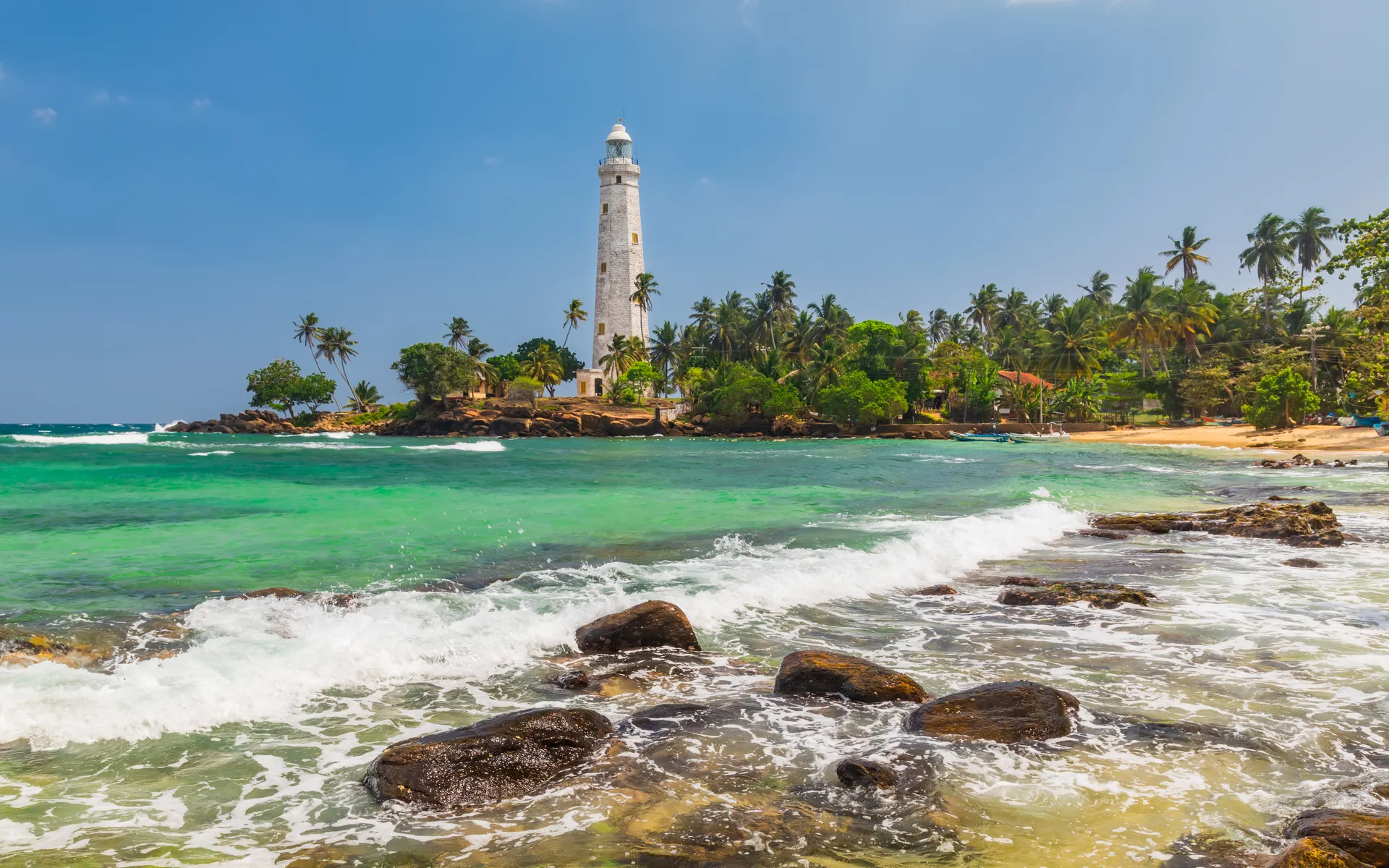
A small island with two monsoons, which means there is almost always good weather somewhere — if you know which coast to be on.
Sri Lanka is compact enough to drive across in a day, yet it runs on two opposing monsoons — which is the secret to timing it well. When one side of the island is wet, the other is usually dry. The art is simply being on the right coast at the right time.
For most travellers, the headline window is December to March. This is the dry season for the west and south coasts, the hill country and the southern safari parks — Colombo and Galle, the tea estates above the cloud line, and Yala for leopards. It is the textbook time for the classic loop, and the busiest.
The east coast keeps the opposite calendar. Trincomalee, Batticaloa and the surf at Arugam Bay are at their best from roughly May to September, when the south-west is having its wettest months. If your heart is set on the east, plan for summer.
The cultural triangle and the central highlands sit between the two systems and are rewarding for much of the year, with brief heavy spells rather than long seasons. March and April — the gap between the monsoons — can be gloriously clear nearly everywhere at once.
A few dates worth knowing: the blue and sperm whales off Mirissa show roughly December to April, and off Trincomalee around March to August; and the great Esala Perahera fills Kandy with fire and drummers in July or August — extraordinary, but plan around it.
Sri Lanka also pairs beautifully with the Maldives next door — heritage, tea and safari on one island, then pure water on the other — which is why it is one of our most-requested honeymoons. The honest answer, as ever, is that the best time depends on the version of the island you want; lining the weather up with that is exactly what we do.