
Vietnam has three climates stacked into one country, so the honest answer is: it depends where you’re going. Here’s how we time it, region by region.
Vietnam is long enough to hold three different climates at once, which is why a single best time has never quite told the truth. The north has a true winter; the centre keeps its own calendar of rain; the south runs warm year-round on a simple wet-and-dry rhythm. Time a journey well and you can chase the best of all three down the length of the country.
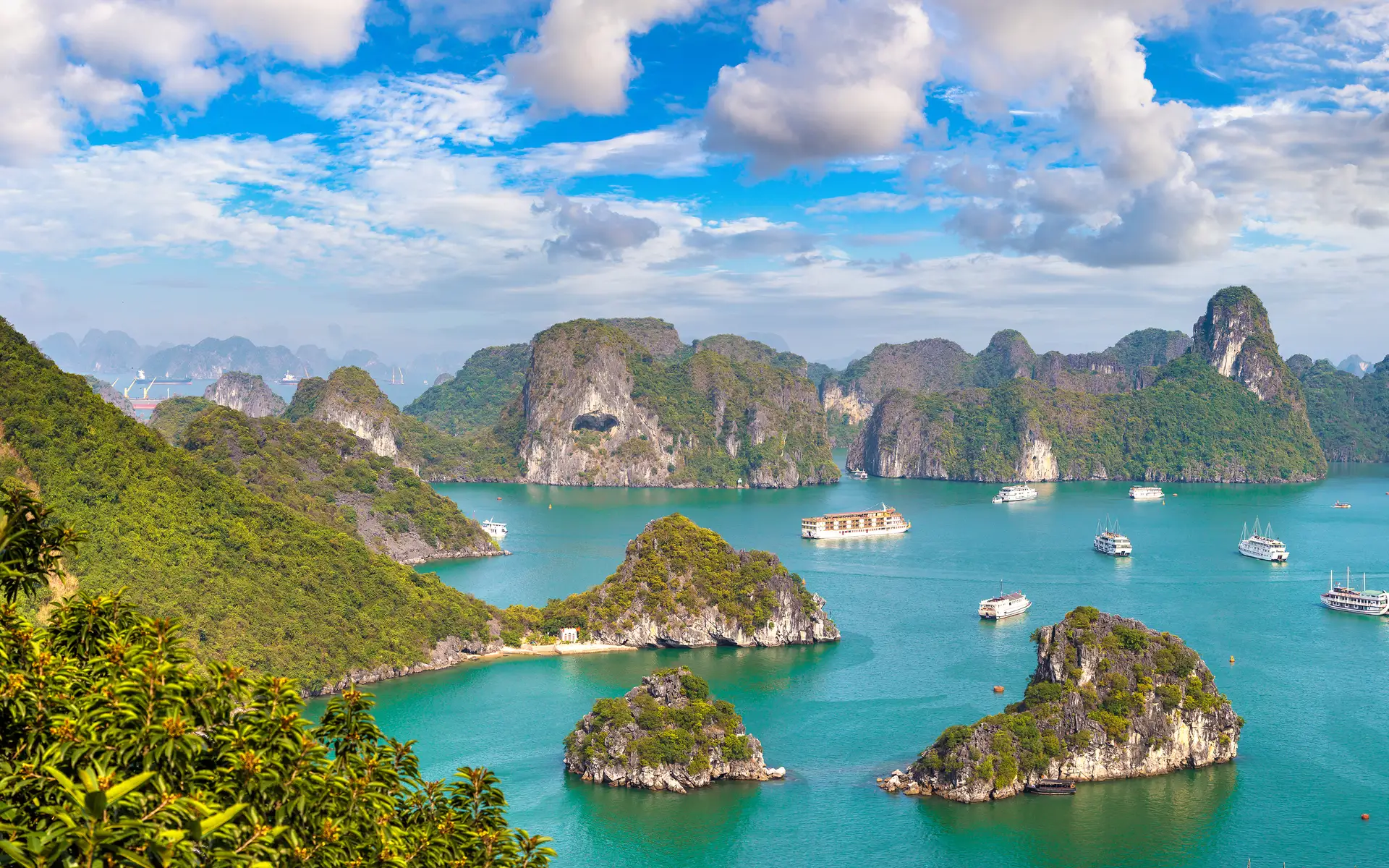
In the north — Hanoi, Lan Ha Bay and the mountains around Sapa — the kindest months are the shoulder seasons: roughly October to December, and March to April. The air turns dry and clear, the bay sits calm under soft light, and in September and October the rice terraces of the highlands run from green to gold. December and January can be genuinely cool and misty — lovely if you pack for it — while the summer brings heat, humidity and the heaviest of the rain.
The centre keeps a stubbornly different schedule. Hue, Da Nang and Hoi An are at their best from around February to August, when the beaches are dry and the old town glows. Their rainy season arrives later than the rest of the country — September to December — which is why the lantern-lit lanes of Hoi An that look so dreamy in photographs can also flood in October and November. If the centre is the heart of your trip, aim for spring or early summer.
The south — Ho Chi Minh City and the Mekong Delta — is the simplest to read: warm all year, with a dry season from about December to April and a green, wetter season from May to October. The dry months are the classic choice, but we have a quiet soft spot for the green season, when the delta is at its most vivid and the afternoon rain arrives like a guest who knows when to leave.
For travellers doing the full length of the country — north to south, the way we most often plan it — two windows flatter almost everywhere at once: roughly March to April, and October to November. They thread the needle between the north’s winter and the centre’s rains, and they sit just either side of the busiest, priciest stretch around the new year.
One date to plan around rather than into is Tet, the Lunar New Year, which usually falls in late January or February. It is a remarkable thing to witness — but much of the country closes to be with family, transport fills, and prices climb. We either build a journey deliberately around it, with the right doors kept open, or steer just clear of it.
And do not write off the so-called wrong months too quickly. The green season trades a little predictability for emptier sites, softer light and gentler rates — and the rain, more often than not, is a short afternoon affair you plan around rather than against.
The honest answer, then, is that the best time to visit Vietnam is whenever we can line up the weather with the version of the country you most want to see. Lining those two things up — quietly, precisely, for just twenty-four journeys a year — is exactly the sort of thing one concierge has the room to get right.
See our twelve-night Vietnam journey→